
Commercial Kitchen Systems
End-to-end LPG pipeline design, installation, and support for restaurants, hotels, and institutional kitchens \u2014 built for continuous service and safe daily operation.
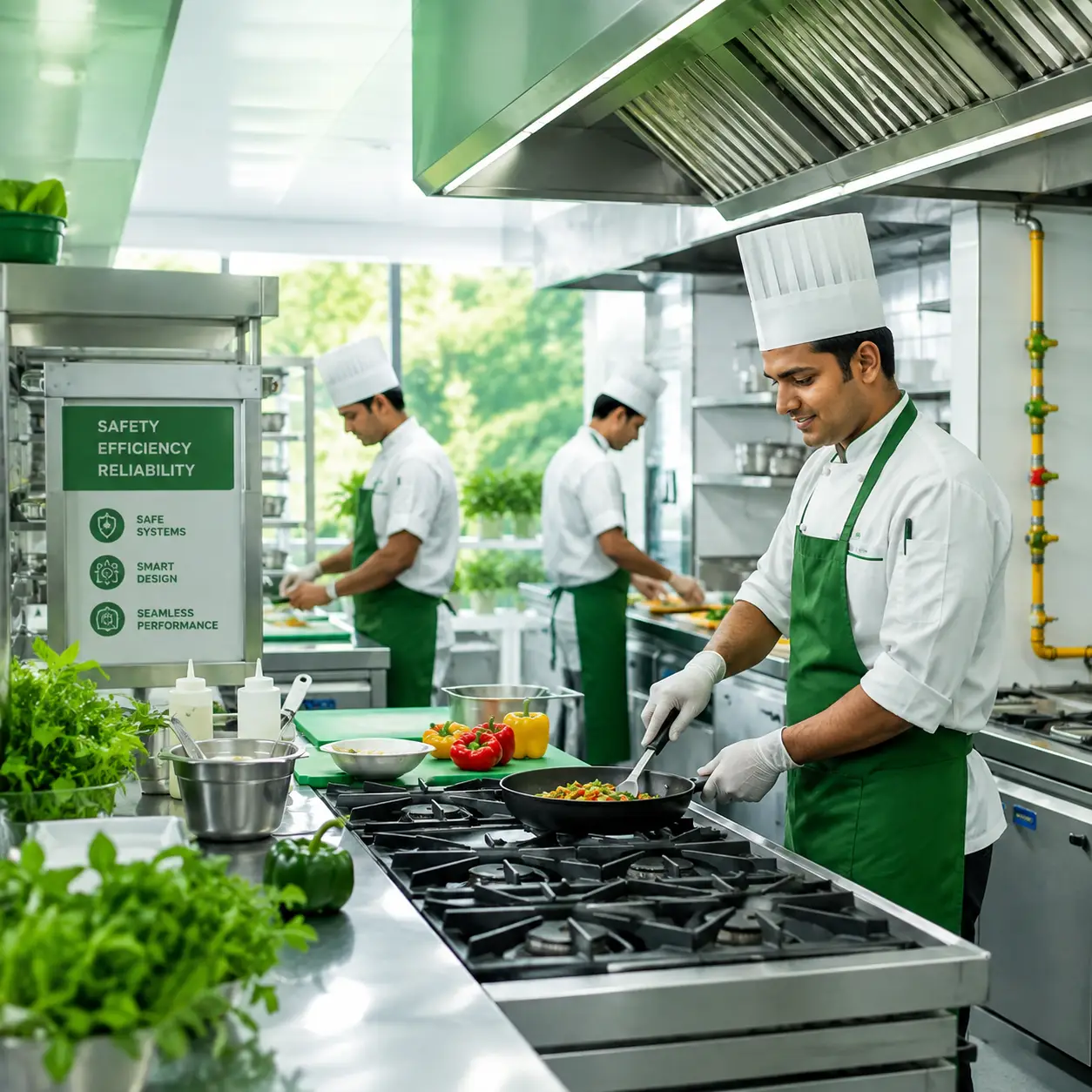
The Lifecycle of a Reliable Kitchen
1. Design & Load Assessment
2. Professional Installation
3. Testing & Commissioning
4. Ongoing Maintenance
System Scope
Engineered for continuous kitchen operation and staff safety. Our commercial kitchen gas systems deliver dependable, code-conscious supply to every cooking line.
LPG Distribution & Manifolds
Centralised bulk or cylinder-bank manifolds with automatic changeover, sized to match your kitchen’s peak simultaneous burner demand.
Kitchen Equipment Integration
Dedicated gas runs to ranges, tandoors, griddles, and bulk cooking equipment, coordinated with your kitchen layout and workflow.
Ventilation & Safety Systems
Gas leak detection, automatic shut-off solenoids, and integration with kitchen exhaust and fire-suppression systems.
Built for Real Kitchens
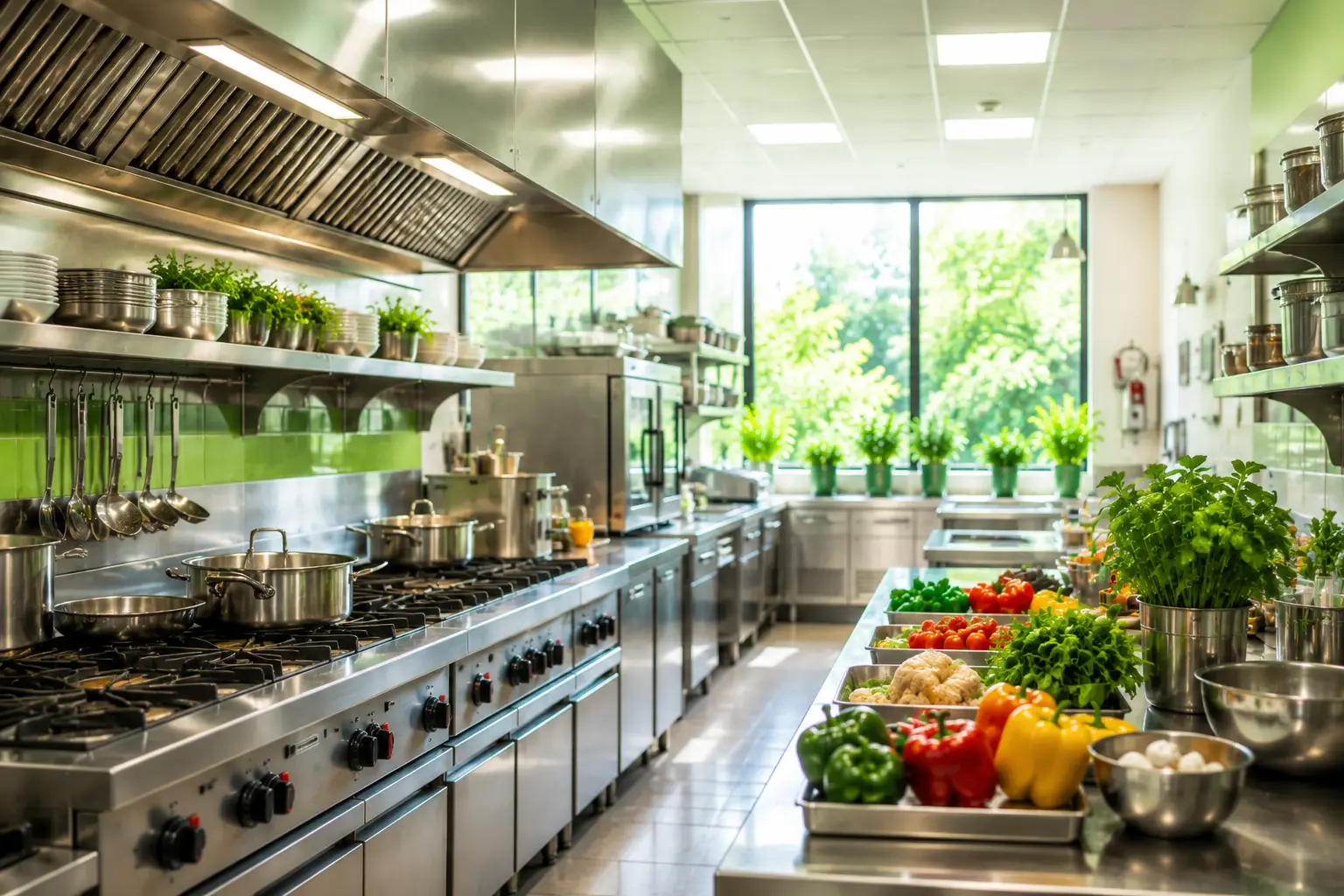
Equipment Integration
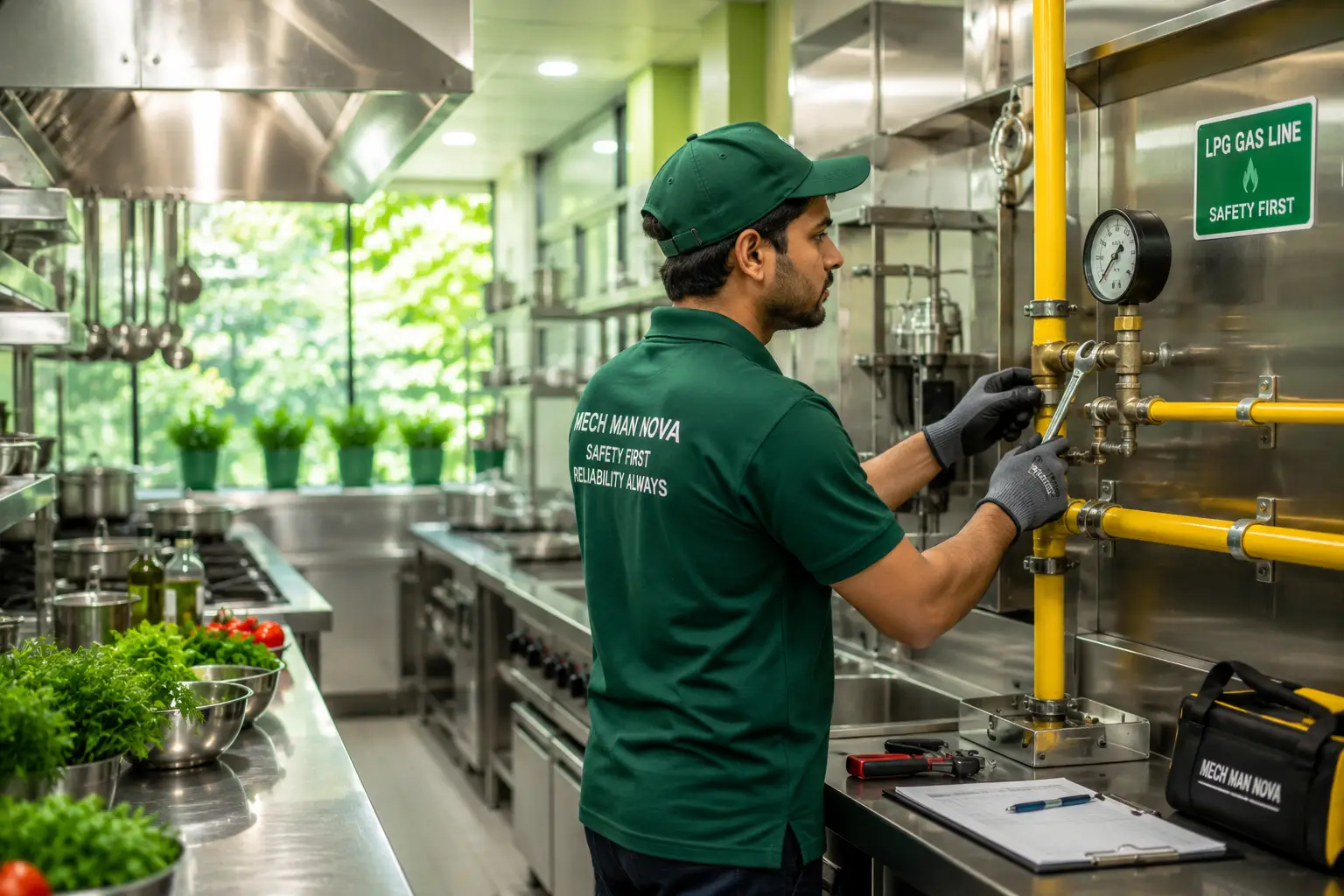
Ongoing Support
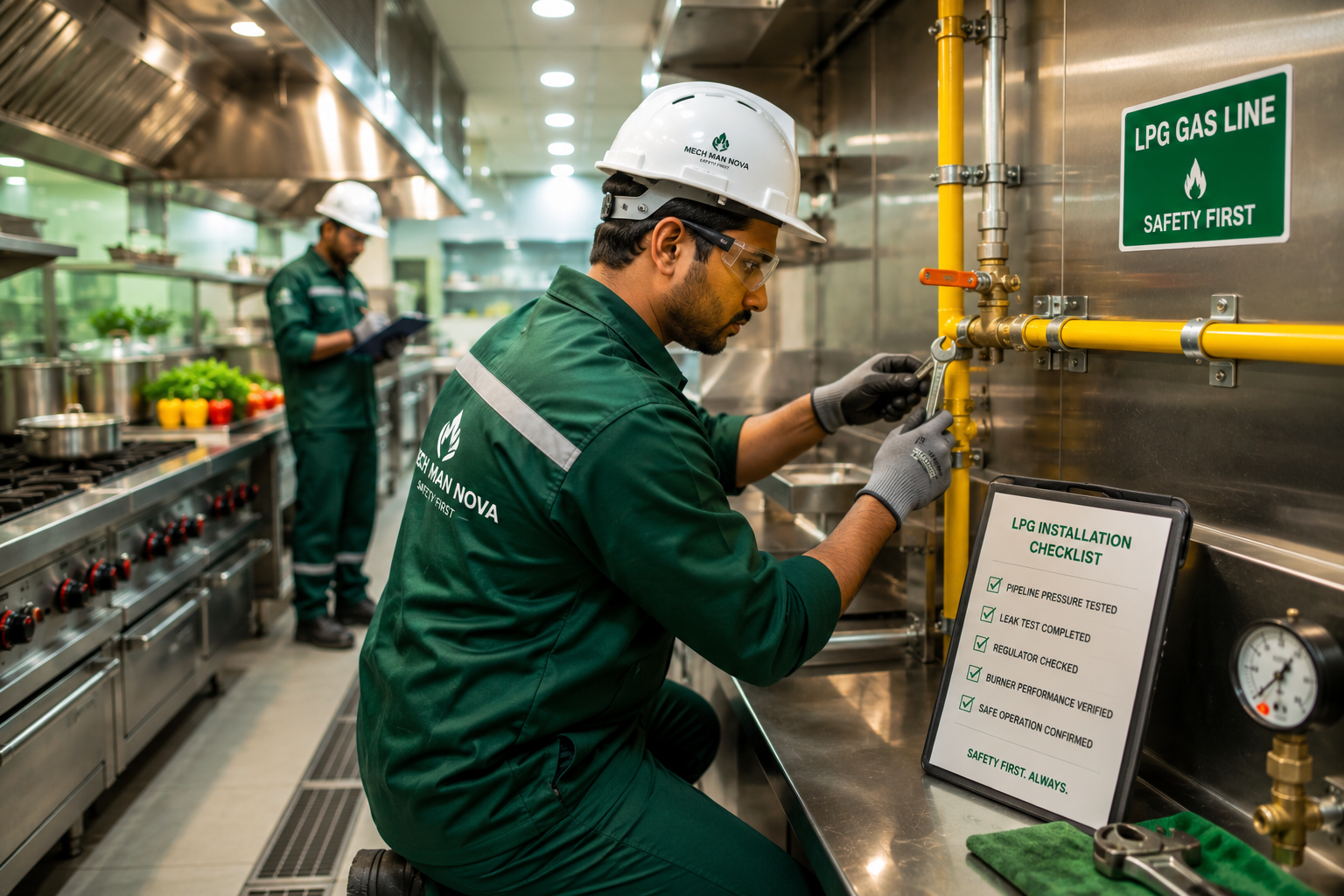
Precision LPG Installation & Commissioning
Our engineering team installs commercial kitchen LPG systems designed for absolute reliability and staff safety. Every phase, from manifold sizing to final commissioning, is carried out by trained technicians using food-grade materials.
- Leak-tested and pressure-verified pipeline runs
- Food-grade approved piping and fittings
- Manifold sizing matched to peak kitchen load
- Documented commissioning report for every installation
Commercial Kitchen Gas Installation FAQs
What restaurant owners, hotel kitchens, canteens and institutional caterers usually ask before a commercial kitchen gas installation or upgrade.
What does a commercial kitchen gas installation include?
A typical installation covers the LPG supply (cylinder bank manifold or bulk storage), pressure regulators, pipeline runs to each appliance, isolation valves, appliance connections, and safety devices such as gas leak detectors with automatic shut-off valves.
Can you connect our existing kitchen equipment?
Yes. Gas lines are routed and terminated to suit your existing or planned ranges, tandoors, griddles, bulk cookers and other equipment, and burner pressures are checked once everything is connected.
How do you size the gas supply for a commercial kitchen?
We add up the gas consumption of every appliance, consider how many run together at peak service, and size the manifold, number of cylinders and pipe diameters so pressure stays steady when the kitchen is busiest.
Can the work be done without closing our kitchen?
For upgrades and extensions, work is planned in stages or outside service hours wherever possible. Final connections need a short, scheduled shutdown that we agree with you in advance.
What gas safety features should a commercial kitchen have?
We recommend gas leak detection linked to an automatic shut-off solenoid valve, an accessible emergency isolation valve, clearly labelled pipework, and adequate ventilation over cooking equipment. The right combination depends on your kitchen layout and equipment.
Do you offer maintenance for commercial kitchen gas systems?
Yes. Scheduled servicing includes leak checks, regulator and valve checks, and inspection of appliance connections, with callout support when you need it. See Services & Support or contact our team.
Ready to Upgrade Your Kitchen's Gas Infrastructure?
Talk to our engineering team about a safe, compliant LPG system built for your kitchen’s workload.